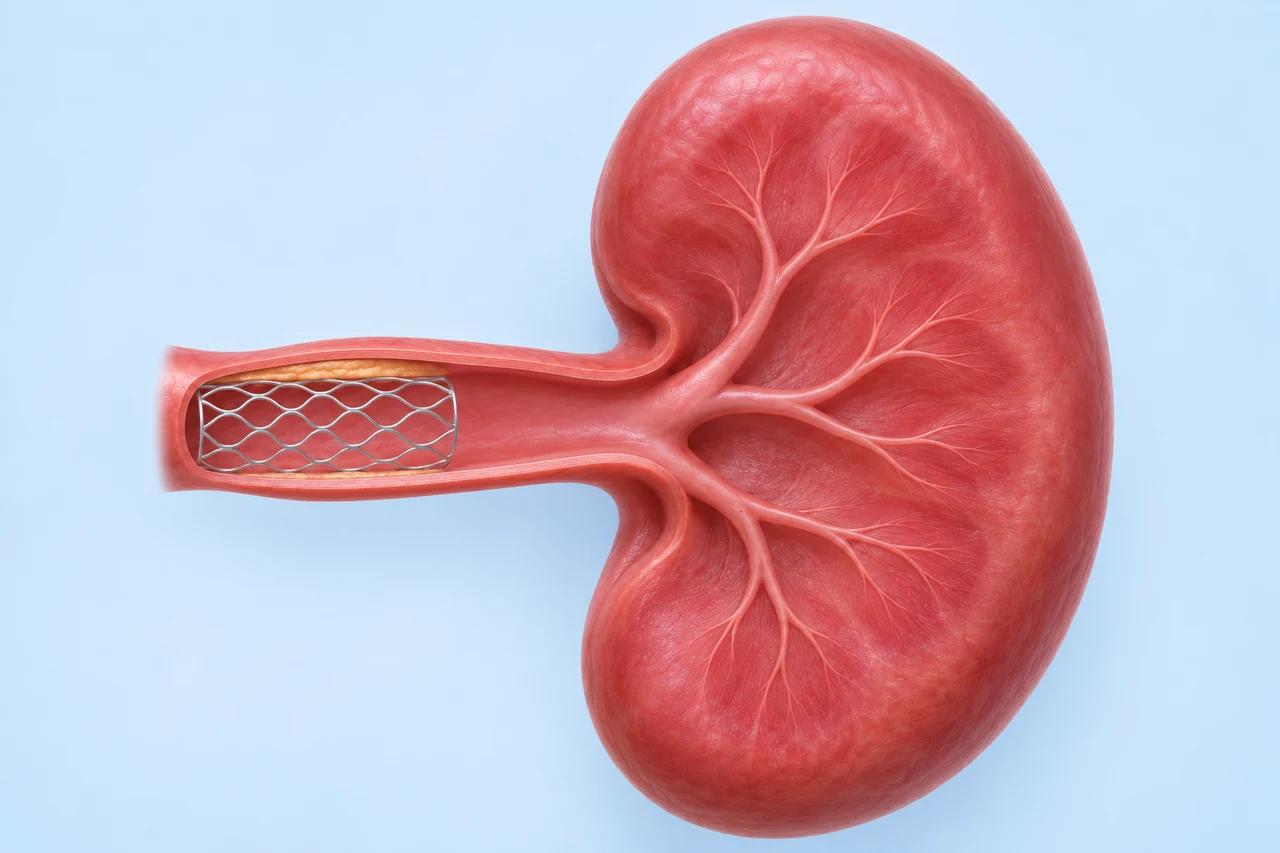
Renal artery stenosis means an artery supplying a kidney has become narrowed. This can contribute to high blood pressure or reduced kidney function. A stent is a small mesh tube that supports the artery from the inside.
When a stent may help
A specialist may consider a stent when a narrowed kidney artery occurs with worsening kidney function, blood pressure that is hard to control or repeated episodes of heart failure.
The decision depends on how much the narrowing affects blood flow and whether opening the artery is likely to help.
How it is placed
A doctor guides a thin tube, called a catheter, into the kidney artery. A small balloon opens the narrowed area, and a mesh stent helps hold it open.
Follow-up care
Follow-up checks your blood pressure, kidney function and blood flow through the artery. Medicines and care for cholesterol, diabetes and other vascular risks remain part of treatment.
Questions patients ask
Does every narrowed kidney artery need a stent?
No. Many people are treated with medicines and follow-up. A specialist considers a procedure when the narrowing is linked to problems such as difficult blood pressure control or worsening kidney function.
What are the risks?
Risks can include bleeding, artery injury, a reaction to contrast, and kidney problems. The artery can narrow again. Your doctor weighs these risks against the expected benefit.
What follow-up will I need?
Your team follows your blood pressure and kidney function and may check blood flow with ultrasound. Ask when you can return to driving, lifting and other activities.
Will the stent replace my medicines?
A stent does not guarantee normal blood pressure or remove the need for medicines. Your clinician explains your medication and monitoring plan after treatment.