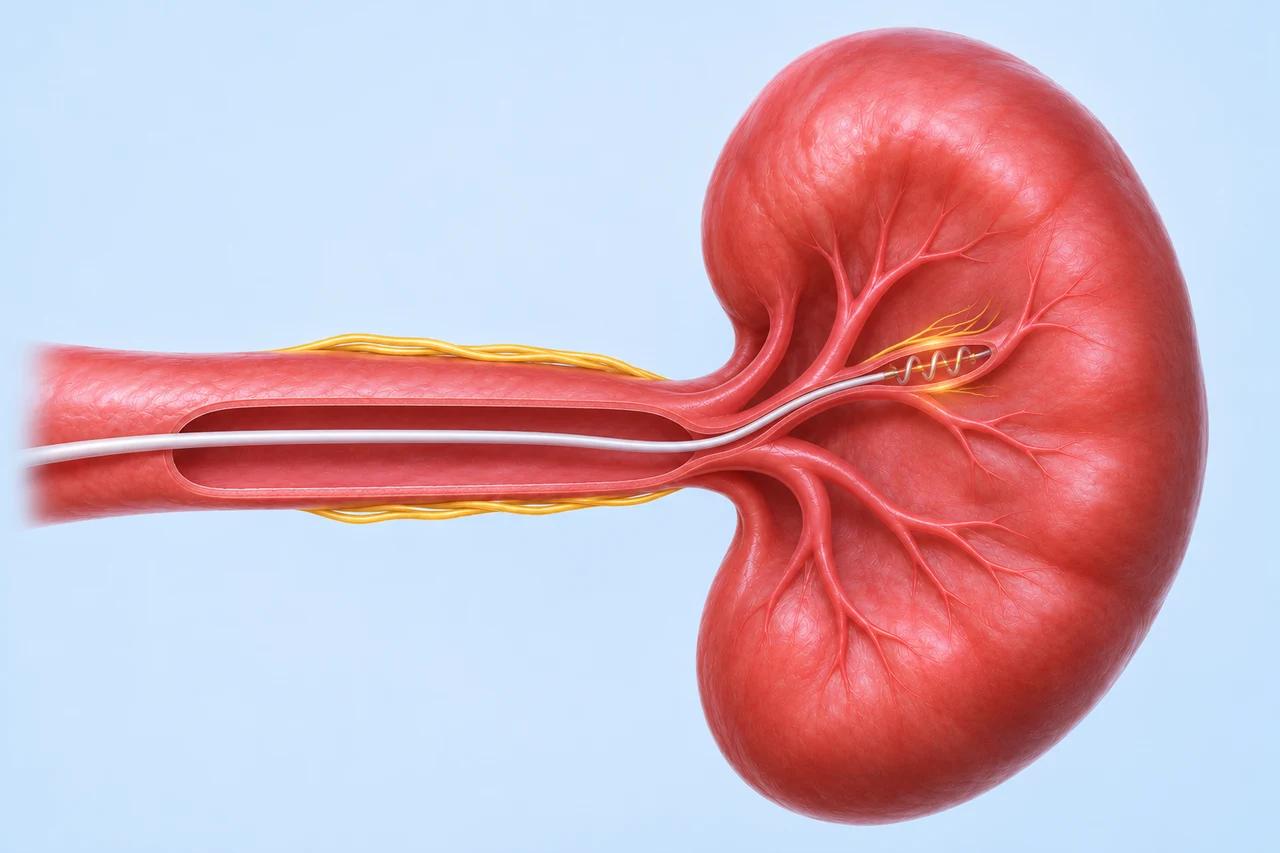
Nerves around the arteries supplying the kidneys help control blood pressure. Renal denervation uses a thin tube, called a catheter, to treat some of these nerves and may help lower blood pressure.
Who may benefit
Your doctor checks readings taken at home as well as in the office. The review includes your medicines, kidney function and possible causes of high blood pressure.
Scans of the kidney arteries help the team decide whether the procedure is suitable.
What happens during treatment
A specialist guides a thin tube, called a catheter, into the arteries supplying the kidneys. Depending on the device, radiofrequency or ultrasound energy is used to treat nearby nerves.
After treatment
Blood pressure may improve over time. Follow-up includes blood pressure checks and a review of your medicines and other treatment.
Questions patients ask
Could renal denervation help me?
It may help selected adults whose blood pressure remains high despite treatment. Your specialist reviews your home readings, medicines, kidney function and kidney arteries before recommending it.
What are the risks?
Possible risks include bleeding, injury to a blood vessel or kidney, and a reaction to the contrast used for imaging. Your doctor explains how your health affects these risks.
What happens after the procedure?
Your team checks the catheter entry site and gives you recovery instructions. Home blood pressure readings and follow-up visits help show how you respond.
Will I still need blood pressure medicine?
You may still need medicine. Renal denervation adds to your care plan; it does not guarantee a cure or fewer medicines. Any medication change should come from your treating clinician.