High Readings, Real Frustration
Trying different medicines and making lifestyle changes, yet still seeing high blood pressure readings, can be frustrating. It is a reason to review the treatment plan with a specialist. High blood pressure can harm the heart, brain and kidneys even when you feel well.
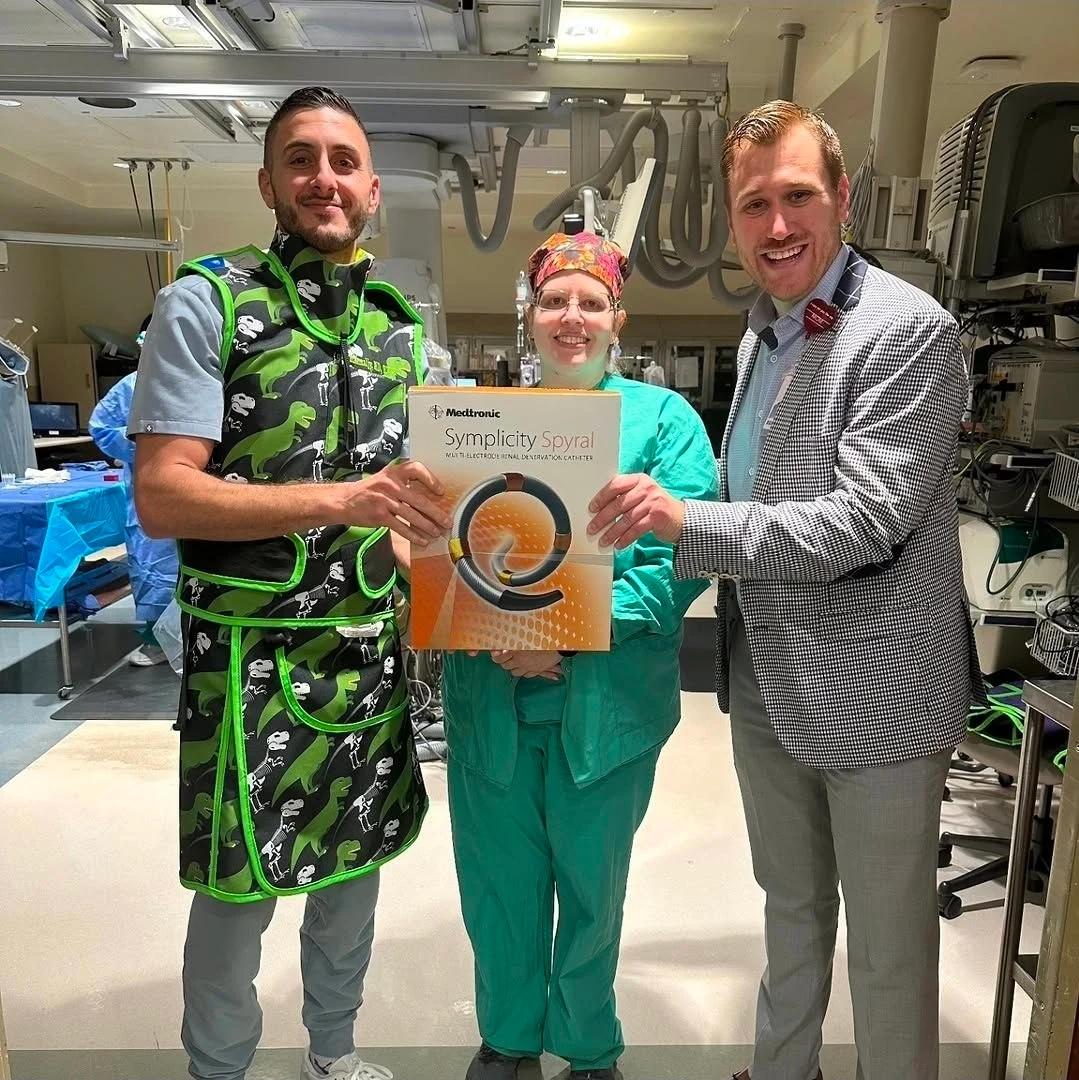
Tampa Cardiovascular Associates offers renal denervation as an additional treatment option for selected patients with hypertension. The photographs show Dr. Hadi Mahmaljy providing this care, along with the procedure team.
The Kidney–Blood Pressure Connection
“Renal” means kidney. Nerves around the arteries supplying the kidneys help regulate blood pressure. In some people, overactive nerve signals contribute to readings that stay high.
During radiofrequency renal denervation, a doctor guides a thin tube called a catheter through an artery to the kidney arteries. The catheter delivers controlled energy to reduce activity in nearby nerves. The catheter is removed afterward; no permanent implant is left behind. This approach addresses nerve activity rather than treating an artery blockage.
Could Renal Denervation Be Right for You?
Renal denervation may be considered for adults whose blood pressure remains high despite an appropriate treatment plan, or whose side effects make further medication increases difficult. It is an option to discuss after a careful evaluation, rather than a routine first treatment.
The American College of Cardiology's 2026 guidance emphasizes confirming that blood pressure truly remains uncontrolled. That includes reviewing home or ambulatory readings, which record blood pressure outside the office. The team also reviews how medicines are taken, practical barriers to treatment, and other contributors to high readings.
Conditions such as sleep apnea, kidney disease or hormonal disorders may need their own treatment. Your kidney function, artery anatomy and medical history also help determine whether renal denervation is suitable. A frustrating history of high readings alone does not establish eligibility.
How Long Could Better Control Last?
For someone whose readings have stayed high through several treatment attempts, an additional reduction may make their blood pressure target more achievable. The goal is to reduce ongoing exposure to high blood pressure as part of a care plan that protects long-term health.
Studies have reported reductions lasting up to three years. In a 2026 report from the SPYRAL HTN-ON MED trial, average blood pressure remained lower in the renal denervation group during extended follow-up.
There are limits to that evidence. Many people originally assigned to the comparison group later received treatment, making long-term comparisons harder to interpret. Several investigators reported relationships with the device manufacturer. Results from a study also cannot predict how much one person's blood pressure will change.
Renal denervation is not a guaranteed cure, and the study did not establish that patients would need fewer medicines. Blood pressure improvements alone do not prove that the procedure itself prevents heart attacks, strokes or kidney failure. The practical goal is to help achieve lasting control while continuing the care that supports long-term health.
After Treatment: Your Blood Pressure Plan
Before a procedure, your doctor discusses potential benefits and risks. Possible complications include bleeding, injury to an artery or kidney, and a reaction to the contrast used for imaging. Your own health and anatomy affect that discussion.
Afterward, blood pressure checks and follow-up visits help the team assess your response. Healthy habits and medicines prescribed by your clinician remain important. Any medication adjustment belongs with the clinician managing your blood pressure.
Talk Blood Pressure With Dr. Mahmaljy
If hypertension has been difficult to manage, ask Tampa Cardiovascular Associates whether a specialist evaluation, including consideration of renal denervation, makes sense for you. Bring recent blood pressure readings, your medication list and notes about previous side effects. Dr. Mahmaljy and the TCA team can review your options and explain the next steps.
Sources
- 2026 ACC Expert Consensus Decision Pathway: Resistant Hypertension — Key Takeaways, American College of Cardiology
- Renal Denervation for the Treatment of Hypertension: Top Things to Know, American Heart Association
- Symplicity Spyral Renal Denervation System: Patient Guide, FDA-hosted Medtronic patient labeling
- Three-Year Durability of Radiofrequency Renal Denervation: SPYRAL HTN-ON MED, Journal of the American Heart Association, June 16, 2026; PubMed abstract
- What Is High Blood Pressure?, National Heart, Lung, and Blood Institute
This article is for general patient education and is not medical advice. Always talk with your physician about your own care. If you think you are having a medical emergency, call 911.